
By Arvenda Team · Remote Work · 5-minute read
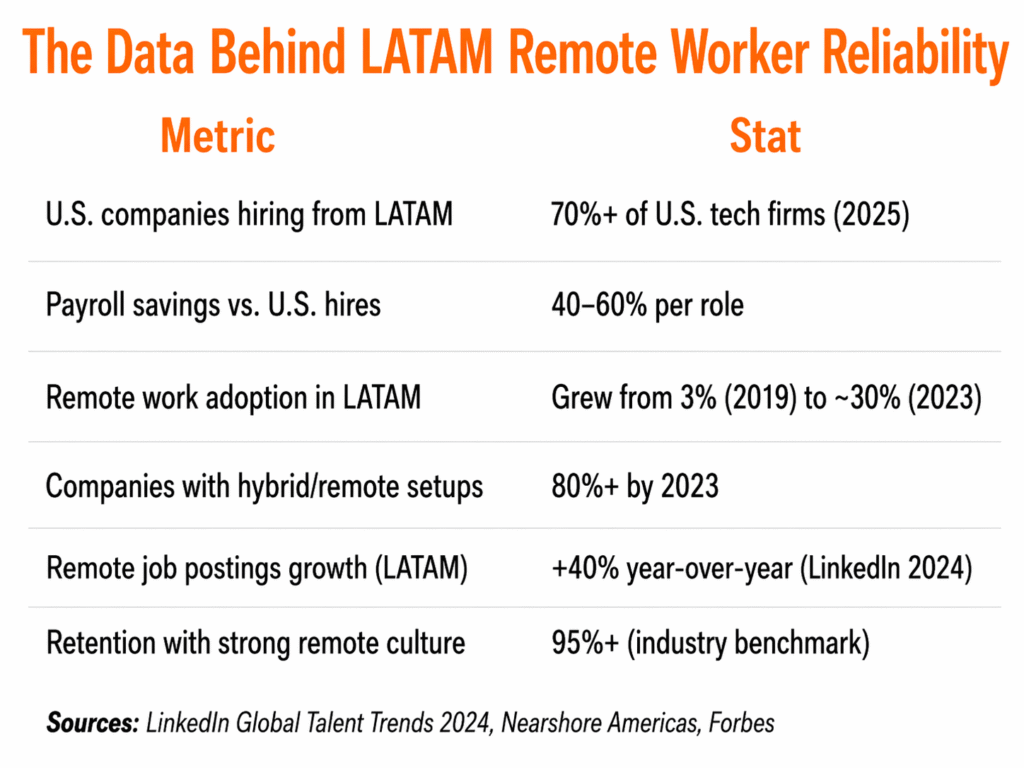
Quick Answer: Yes. Remote workers from Latin America are highly reliable. Over 70% of U.S. based companies actively hire from the region for different reasons such as: strong work ethic, time-zone alignment, growing English proficiency and technical skills, all of these at 40–60% lower cost than equivalent U.S. hires. Countries like Colombia, Argentina, and Mexico consistently top global remote-readiness rankings.
If you’ve ever wondered whether hiring a remote worker from Colombia, Argentina, or Mexico is a safe bet, you’re not alone. It’s one of the most common questions U.S. business owners ask before taking the leap into nearshore staffing. The answer, backed by data and thousands of successful placements, is a clear yes. Here’s what the evidence actually says.
What Does “Reliability” Actually Mean in a Remote Context?
When business owners ask about reliability, they’re really asking four questions:
- Will they show up and meet deadlines?
- Can I communicate with them effectively?
- Do they have the technical skills they claim?
- Will they stay long-term?
Latin American professionals check all four boxes and the data backs that up.
5 Reasons Latin American Remote Workers Are Highly Reliable
1. Time-Zone Alignment Means Real-Time Collaboration
Most of Latin America operates within 0–3 hours of U.S. time zones. That means Latin American teams naturally share 6–8 working hours of overlap with the U.S.-based managers; far more than offshore alternatives in Asia. Morning standups, same-day feedback, and real-time Slack communication are all normal, not the exception.
2. English Proficiency Is Rising Fast
Countries like Colombia, Uruguay, and Argentina are consistently rated among the top English-speaking nations in Latin America. Professionals who work with international clients are often bilingual and bicultural, making communication smooth and misunderstandings rare. This is a major shift from a decade ago, and it keeps improving.
3. A Proven Work Ethic Built Around Remote-First Culture
Latin American professionals didn’t just adapt to remote work; many built their careers around it. They’ve developed home setups, async communication habits, and self-management systems that make them genuinely effective without daily oversight. Remote work isn’t a temporary arrangement for them; it’s a professional identity.
4. Strong Technical and Professional Education Base
Latin America has strong engineering, finance, and business education pipelines. Countries like Colombia, Mexico, and Argentina produce large numbers of university-trained professionals every year. Demand for data roles in the region grew 29% in 2024 alone, and customer service and tech roles are among the top positions filled regionally.
5. Cultural Alignment With U.S. Business Norms
Latin American professionals value professionalism, punctuality, and collaboration; traits that align directly with what U.S. companies expect. Cultural proximity to the U.S. means fewer surprises around work expectations, meeting etiquette, and output standards. This cultural fit reduces friction and accelerates onboarding.
Honest Disclaimer: What to Watch Out For
Being honest matters more than just selling you in Latin America. There are real considerations:
- Internet connectivity varies. Top-tier talent in Bogotá or Medellín has excellent broadband; rural areas can lag. Serious remote professionals have redundancy plans such as mobile hotspots & co-working access.
- Vetting still matters. The talent pool is large, but quality varies. Working with a specialist staffing partner who screens for English level, remote readiness, and technical skills is essential. That’s what Arvenda is for.
- Management style matters more than location. Remote teams fail because of poor management design, not distance. Defining outcomes over hours and investing in async communication tools (Slack, Loom, Notion) makes all the difference.
Frequently Asked Questions
Are Latin American remote workers good at English? Yes, especially in Colombia, Argentina, and Uruguay. Professionals who work with international clients are typically bilingual. English fluency has been rising significantly across the region over the past five years.
What roles are Latin American remote workers best at? Latin American professionals excel in customer service, sales development (SDRs), bookkeeping, paralegal support, software development, digital marketing, data analysis, and executive assistance; all areas where Arvenda regularly places candidates.
How do Latin American remote workers compare to Asian offshore workers? Latin America offers significantly better time-zone alignment with the U.S. (0–3 hour difference vs. 12+ hours), which enables real-time collaboration. Asia may offer lower rates in some roles, but the productivity cost of delayed communication often offsets the savings.
Will a Latin American remote worker stay long-term? Retention among LATAM remote workers is strong when the employer invests in clear communication, competitive pay, and a positive remote culture. Companies with strong remote cultures report 95%+ retention. Arvenda also provides ongoing HR support to protect your investment.
Ready to Hire a Reliable Remote Professional from Latin America?
Arvenda has helped 40+ U.S. companies build high-performing nearshore teams, saving over $20M in operational costs. We handle sourcing, vetting, payroll, and ongoing support.
Schedule a free 15-minute call →
Related Articles: How Much Does Remote Staffing from Latin America Really Cost? · Best Countries for Remote Staffing in Latin America (2026) · Why Time Zone Alignment Is the Secret Weapon for U.S. Nearshore Success